Solutions
Solutions
Sensors, round planning and reporting — sold together, because the parts only work together.
Britannia IoT Solutions supplies three things as one managed subscription: radar fill-level sensors with NB-IoT connectivity, software that builds an optimised waste collection round from the readings every morning and pushes it to a driver app, and reporting that turns months of fill history into evidence for complaints, climate targets and contract negotiations.
You cannot buy the parts separately from us, and that is deliberate. Sensors without planning software produce a dashboard nobody has time to read; planning software without accurate measurement produces rounds crews stop trusting.
What we supply
Fill-level sensors & connectivity
Radar measurement inside the lid, sealed, battery-powered, around eight years of life at six readings a day, connected over the NB-IoT mobile network. Ten minutes to fit, no wiring, no bin modification.
Sensors in detailDynamic round planning & driver app
An optimised round generated automatically each morning from overnight readings, delivered to the driver's tablet with live fill percentages, locations, navigation and one-tap lift confirmation.
Round planning in detailAnalytics, forecasting & reporting
Fill history per container, AI emptying forecasts, demand heat maps, complaint evidence, mileage and CO₂ reporting, and the data to remove bins that were never needed.
Reporting in detailWhat is included
One subscription, one accountable supplier
Smart waste projects usually fail at the seams — between the hardware vendor, the connectivity provider and the software licence. We removed the seams.
| Component | Included | Notes |
|---|---|---|
| Radar fill-level sensor | Yes | Per container. Replacement hardware for faults and end-of-life batteries included. |
| SIM and NB-IoT connectivity | Yes | Runs on existing UK mobile infrastructure. No network for you to build or maintain. |
| Software platform | Yes | Unlimited users. Dashboard, round planning, thresholds, alerts and reporting. |
| Driver app | Yes | Android and iOS. Usable by in-house crews or your contractor. |
| Installation | Optional | We install, or we train your team — it is a ten-minute job per bin and most customers take it in-house after the first tranche. |
| Bin register survey | Optional | Fixed-price if your container data is incomplete. Worth doing properly; it is the usual cause of trouble later. |
| API and data export | Yes | Open API and full export at any time. Your history remains yours. |
| Support | Yes | UK business hours, with sensor health monitored centrally so failures surface before they cause a missed lift. |
Container types
What we can instrument
If it holds waste and something has to come and empty it, it can usually be measured.
Street & park bins
Typically 60–240 litres, on high streets, promenades, parks and transport interchanges. The highest-frequency, lowest-yield collections in most operations — and therefore the biggest saving.
Semi-buried & underground
Up to around three cubic metres, with no way to judge fill level from the street. One of the strongest cases for sensors, and one NB-IoT was chosen to serve.
Bring sites & recycling points
Glass, cans, paper, card, textiles. Frequently in rural or edge-of-town locations where a wasted visit costs a long drive.
Communal & trade containers
Eurobins and communal housing containers, plus commercial waste at business parks, retail sites, universities and hospital estates.
Beyond collection rounds
Other modules on the same platform
Round planning is where most authorities start, but the platform covers the rest of a waste operation too. These are available if and when they are useful — nothing is bundled that you have not asked for.
Recycling centre management
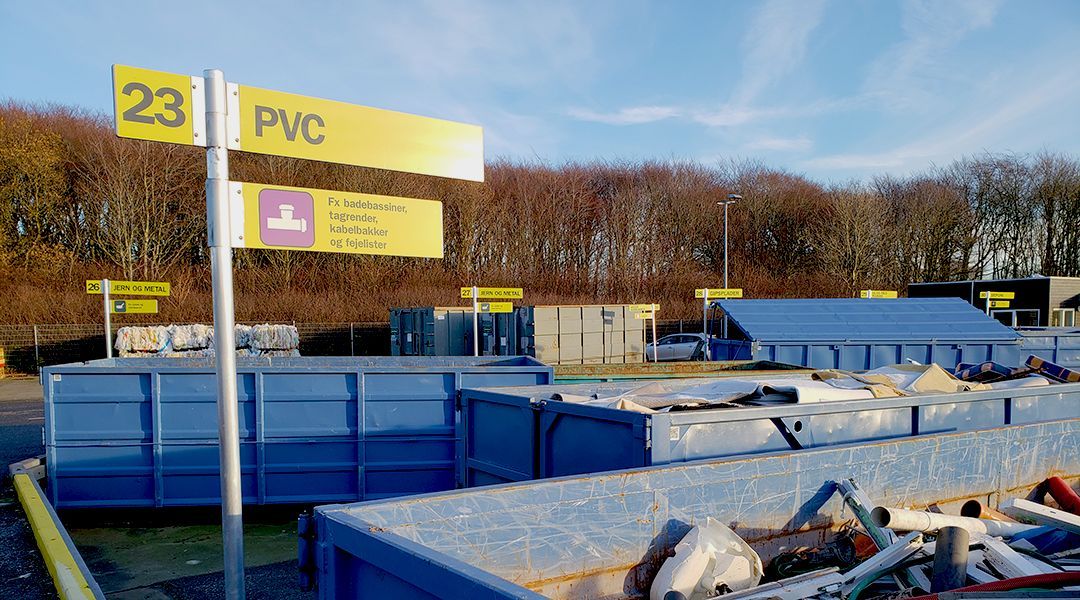
Container monitoring and swap scheduling for HWRCs and bring sites, where a bulk container swap is expensive and is usually scheduled rather than triggered by need.
Container transport
Movement and delivery of containers themselves — new bins, replacements, repairs and returns — planned alongside the waste collection rounds rather than as a separate job.
Bulky waste
Booked collections scheduled into existing rounds instead of run as standalone trips, which is where much of the avoidable mileage in a bulky service sits.
Service management
Faults, damage and access problems reported by drivers at the container, tracked to resolution rather than remembered at the depot.
Invoicing data
Confirmed lifts per container per period, exportable for billing or for checking a contractor's invoice against what was actually done.
Vehicle tracking
Where the fleet is and where it has been, tied to the same container and lift records rather than sitting in a separate telematics silo.
Questions
Buying questions
Can we buy just the sensors and use our own software?
We supply the platform as one service, because the two halves depend on each other and split responsibility is where these projects come unstuck. What we do support is integration: fill-level data can be pushed to an existing in-cab, route management or BI system through the API, so your crews and analysts keep the tools they already use while the measurement and health monitoring stay our responsibility.
Is there a minimum number of containers?
Pilots typically start around 30 to 50 containers — enough to be representative of a real round. Stralsund's trial ran on 35 bins and Langeland began with about ten before scaling to 220. Below roughly 30 the sample is too small to tell you anything reliable about your wider estate.
What happens at the end of the contract?
You export your full fill history and either renew, move to another supplier, or stop. Sensors remain our responsibility for removal or transfer depending on the terms agreed. We do not hold data as a retention mechanism — the export is available throughout the contract, not just at the end of it.
Next step
See what your own bin data would say
A 90-day pilot on one round tells you exactly how much of your current collection effort is going to bins that were not full. No commitment beyond the pilot, and you keep the data.