Case study · Germany
Stralsund: 71% fewer street bin collections
A Baltic city of 55,000 instrumented 35 town-centre bins. Collections fell by 71%, mileage by 54%, and the pilot paid for itself in under a year.
The City of Stralsund fitted radar fill-level sensors to 35 town-centre public waste bins as a one-year trial. Weekly collections fell from 1,548 to 445 — a 71% reduction — and weekly distance driven fell from 1,677 km to 779 km, down 54%. Working hours on the task fell 30%. The investment paid for itself in under a year, and the city committed to installing at least 100 more sensors.
The situation
Stralsund is a Hanseatic city on Germany's Baltic coast with 55,000 residents and a UNESCO-listed old town. Its public bins — typically 60-litre units on streets and in parks — produce around 180 tonnes of waste a year, and were emptied twice a week regardless of use.
The trial formed part of a wider Smart City programme in Mecklenburg-Western Pomerania. The stated aims were straightforward: reduce the number of waste collection vehicle journeys, and with them staff costs, operating costs and CO₂ emissions.
What was deployed
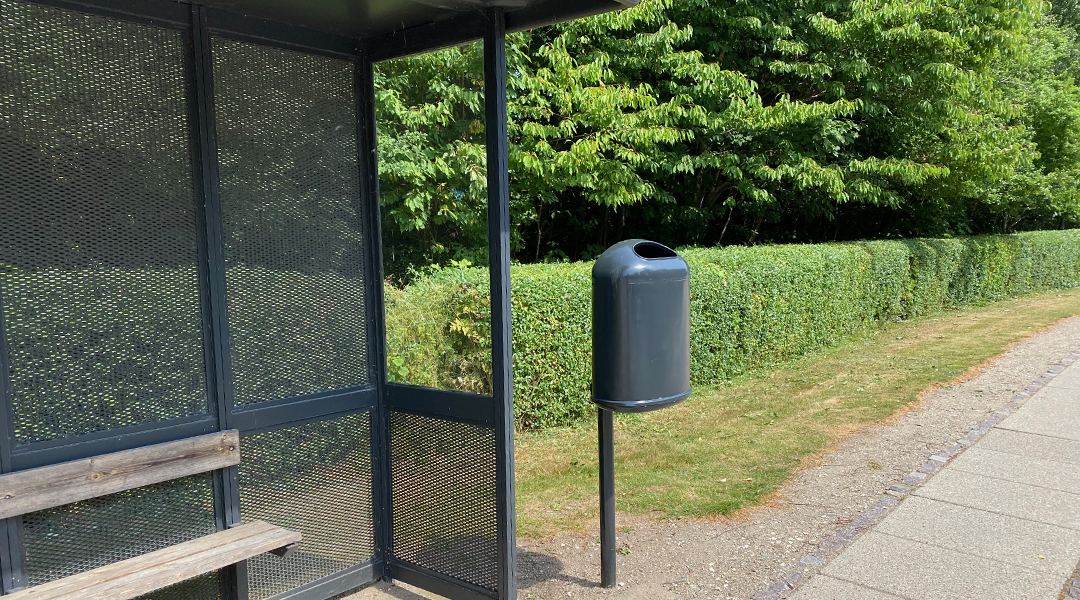
Radar sensors were mounted in the lids of 35 bins in the old town. Each sensor uses radar waves to measure the volume of waste beneath it and therefore the current fill level, transmitting six times a day. The city's waste management team receives the readings continuously and empties bins as needed rather than on a schedule.
The hardware itself drew unusual enthusiasm from the client. Stralsund's head of waste management described the radar sensor as a technical marvel — a small, lightweight, shock-resistant box containing the electronics, the power supply and the mini-radar, with a battery lasting eight years at six transmissions a day.
The results
After the first few months:
- Weekly collections fell from 1,548 to 445, a reduction of 71%.
- Weekly distance travelled by refuse vehicles fell from 1,677 km to 779 km, a reduction of 54%.
- Working hours on the task fell by 30%, releasing staff for other urgent work.
- The investment paid for itself in under a year.
The city noted that these results came from the quieter winter and spring months and still met expectations.
We have saved over half the kilometres travelled by the refuse collection lorries, and we have been able to reduce working hours by 30 per cent compared to before. This has allowed us to deploy staff to other urgent tasks, and we have become more efficient overall.Head of waste management — Stadt Stralsund
What the data revealed
The most instructive finding was not the aggregate saving but the variance underneath it. Usage differed enormously between individual bins: some remained virtually empty between the twice-weekly visits, while others filled far faster than anyone had expected. No amount of experience produces that map. Only measurement does — and it is the reason a uniform frequency is always wrong in both directions at once.
The crew's view
The driver was reported as equally positive. On a tablet he can see how full each bin is and its exact location, and plans his own route based on which bins are full and which are not. The city's account is explicit that this saves a lot of time — and it illustrates a pattern common to every successful deployment: the crew is given the data and the discretion, rather than a route to follow blindly.
What happened next
The pilot was scheduled to run for a year before a decision on continuation. It did not need the full year. On the evidence of the first months, the city committed to installing at least a further 100 radar sensors that year, with expansion continuing in subsequent years.
Deployment at a glance
- Location
- Stralsund, Mecklenburg-Western Pomerania, Germany
- Population
- 55,000
- Waste volume
- 180 tonnes a year from public bins
- Containers
- 35 public bins, typically 60 litres, in the old town
- Technology
- Radar fill-level sensors mounted in the bin lid
- Reporting
- 6 readings per day
- Battery
- 8 years at that frequency
- Before
- Collections twice weekly regardless of fill
- After
- Collections only when sensors indicate bins are nearly full
- Collections
- 1,548 → 445 per week (−71%)
- Distance
- 1,677 km → 779 km per week (−54%)
- Working hours
- −30%
- Payback
- Under 12 months
- Next phase
- At least 100 further sensors, with continued expansion
- Context
- Part of a regional Smart City programme
These figures are as published by the operating authority. They document a deployment of BrainyBins® by Maacks ApS — the platform Britannia IoT Solutions supplies in the United Kingdom — and are presented as evidence for the technology rather than as a Britannia IoT Solutions client engagement. Outcomes in any given operation depend on current collection frequency, bin density and round geography — which is what a pilot measures.
Questions
Reading the Stralsund numbers
Is a 71% reduction realistic for a UK town centre?
It is realistic where the starting point is the same: bins emptied on a fixed twice-weekly cycle regardless of use. That describes a great many UK street-bin rounds. The reduction was as large as it was precisely because the previous frequency was generous relative to actual demand — the data showed some bins virtually empty between visits. A round where bins genuinely fill every day has far less slack, and would show a much smaller figure. The only way to know which you have is to measure for a few weeks before changing anything, which is why we build an observation period into every pilot.
Only 35 bins — is that a large enough sample to trust?
For a decision about whether to expand, yes: 35 bins over several months produces thousands of readings and a clear picture of variance across a comparable set of locations. It is also the right size for a first commitment — small enough to abandon cheaply, large enough to be representative. Stralsund did not wait for the planned full year before extending by another 100 units, which is a reasonable indication of how clear the signal was.
Does it hold up outside winter and spring?
Stralsund made this caveat itself — that the early results came from quieter months. Higher demand narrows the gap between fixed and sensor-led collection at the busiest bins, since those genuinely need frequent emptying. But it widens it at the quiet ones, and it is at peak that a fixed timetable fails in the other direction by leaving busy bins overflowing. Fanø's seasonal deployment, where summer population multiplies sixteenfold, is the better guide to peak-season behaviour.
Next step
See what your own bin data would say
A 90-day pilot on one round tells you exactly how much of your current collection effort is going to bins that were not full. No commitment beyond the pilot, and you keep the data.